Sunday, October 11, 2020

O scurtă poveste despre genul parfumurilor

Că ne plac sau nu propunerile ei olfactive, putem spune că Estée Lauder, născută Josephine Esther Mentzer (1906-2004), a avut un fler aparte. Într-o Americă râvnind la opulența și rafinamentul bătrânului continent, Lauder a știut să le ofere femeilor mesajul și aromele potrivite, pentru ca acestea să se simtă deosebite. Totodată, a știut cum să le vândă visul american, prin introducerea aproape perfidă a unor noi identități olfactive. În 1953, Lauder le propune femeilor – care încă ezitau să-și aproprieze un parfum puternic – un ulei de baie, Youth Dew, care ușor-ușor se insinuează în obiceiurile clientelei sale, pregătind astfel lansarea parfumului propriu-zis. Însă femeile au fost dintotdeauna clientela fidelă a caselor de parfumuri, provocarea rămânând acapararea teritoriului masculin. Dacă, pe continent, casa Caron a avut curajul să lanseze, în 1934, Pour un homme, primul parfum dedicat bărbaților (în ciuda notelor de fond vanilat-ambrate, specifice parfumeriei feminine, ceea ce a permis, în timpul celui de-al Doilea Război Mondial, să fie comercializat pentru femei*), în America, unde ideea virilității cerea o imagine olfactivă pe măsură, lucrurile au avut nevoie de timp ca să se definească.

Old Spice a fost printre primele esențe care au contrariat așteptările, iar povestea lui, care bulversează granițele de gen, merită urmărită îndeaproape. William Lightfoot Schultz, fondatorul companiei Shulton, care a lansat produsul, s-a inspirat dintr-un potpuri al mamei sale, rezultatul fiind, în 1937, un parfum feminin numit Early American Old Spice, care însă nu a avut succes. În 1938, după o accentuare a notelor citrice, compania relansează parfumul, de această dată – surpriză! – adresându-l bărbaților sub numele simplu de Old Spice, alături de o gamă asociată de produse: săpun de ras și after-shave.

Estée Lauder a învățat bine această lecție, se pare, fiindcă, în 1964, lansează Aramis Inc., linie dedicată produselor cosmetice masculine. Dar nu se rezumă doar la asta – iar aici mi se pare că rezidă adevărata ei viclenie. Parfumurile masculine din seria Aramis sunt pur și simplu reajustări ale versiunilor feminine din gama Lauder. Ușor revizuite, parfumurile masculine stau alături – ca frate și soră – de parfumurile feminine. Legăturile pot fi stabilite cu ușurință de către oricine compară cele două versiuni. Nu de mult gama „starurilor” masculine de la Aramis a fost relansată sub titulatura Gentleman’s Collection, care cuprinde, sub aceeași prezentare, Aramis Life, Aramis Devin, Aramis New West, Aramis JHL, Aramis Tuscany, Aramis 900 și Aramis Havana. Desigur, nu trebuie uitat „părintele” tuturor, celebrul Aramis Aramis, care, ciudat, a fost lăsat în afara colecției. Dar chiar și acesta reia o idee olfactivă care se găsește într-un precursor feminin, și anume în Cabochard de la Grès, amintind, în substrat, și de Youth Dew de la Estée Lauder sau de Aromatics Elixir de la Clinique, marcă aparținând trustului Estée Lauder.

Povestea parfumurilor create pentru Lauder este un exemplu foarte instructiv privind fuziunea și transgresarea genurilor în parfumerie și sugerează destul de multe despre modul în care etichetările de gen sunt dictate de marketing sau de factorii socioculturali.


* „...în perioada războiului, efluviul [Pour un homme – n.n.] poartă numele Pour une femme. Mărcile create de evrei sunt taxate, în această epocă, la cote exorbitante. Când Ernest [Daltroff – n.n.], evreu polonez, e nevoit să se exileze în Statele Unite, ca să scape de pericolul nazist, compania lui nu vrea să plătească impozitul de 200%. Ca atare, în 1941, vine cu ideea de a reboteza produsul, fără să-i schimbe însă formula. În acest fel, Pour un homme izbutește să existe în continuare pe piață. Sclipitoare păcăleală!”
— Anne Davis și Bertrand Meyer-Stabley, Parfumuri de legendă, traducere de Ines Hristea, Baroque Books & Arts, 2017, pp. 103-104

PE URMELE PARFUMULUI | Nona Rapotan

Ne pierdem busola

un articol de Nona Rapotan
editor coordonator la Bookhub


Ne pierdem busola. Odată cu mirosul. Nici nu ne dăm seama când și cum am ajuns într-un no man’s land – teritoriu al provizoratului și al gurii de aer sorbit cu nesaț. Dintr-odată pare mai curat aerul, e respirabil, poți să-ți umpli plămânii cu el la până la refuz. Dar ce faci cu mirosul?  Ce să miroși când ieși din tranșee?

Mă gândeam că cel mai prezent simptom al infectării cu SARS-CoV-2 (COVID-19) este și cel mai ignorat; într-o lume care se hrănește bulimic cu legume și fructe crescute forțat cu hormoni, pierderea gustului și a mirosului nu mai este de multă vreme simptom de boală. Roșia are același gust cu vânăta, iar pomelo nu-ți impresionează în niciun fel papilele gustative, deși se zice că ar fi sursă de vitamine.

Mă plimbam printr-un Cluj regăsit după mai bine de jumătate de an într-o stare semiletargică, cu oameni confuzi, care încearcă să-și regăsească ritmul vieții. N-am reușit să mă bucur pe deplin de vizită; n-am putut intra într-o anumită biserică, mai toate locurile unde știam că se mănâncă (bine) aveau fie meniurile schimbate (multe, prea multe sendvișuri, adică pâine în cantități care-mi taie orice poftă de mâncare), fie erau închise (foarte ciudat să vezi sâmbăta astfel de locuri închise); studenții încă n-au invadat orașul (semn că online-ul face ravagii și aici), iar localnicii păreau mai derutați decât oricând de prea multa liniște. Mi-am regăsit și nu mi-am regăsit orașul de suflet. Ambivalența aceea ucigătoare care se transformă în furie – de ce nu știm să păstrăm ce e mai bun? – mă face să abandonez plimbarea mai repede decât mi-am propus. Cafeaua și limonada savurate împreună cu un prieten salvează mare parte din zi, dar... Ce știu sigur e că fără astfel de bule n-aș putea merge mai departe.

Saturday, October 10, 2020

ANTOLOGIE: Mirosul corpului

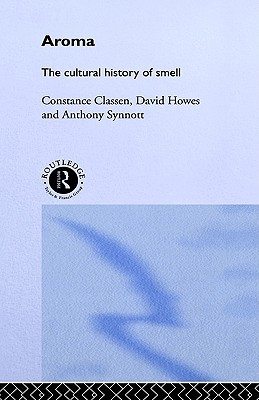
“Body odour”, în Constance Classen, David Howes and Anthony Synnott, Aroma: the cultural history of smell, Routledge, 1994, part III: “Odour, power and society”
 

Concern with body odour and with methods of suppressing it has existed in the West since antiquity. What is new in our era—the era of consumer capitalism—is the availability of ready-made, mass- produced products to deal with body odours and the advertising used to promote them. Furthermore, due in part to these new techniques of production and marketing and in part to life-style changes, whereas in previous centuries it was largely the well-to-do who were preoccupied with ‘smelling sweet’, this concern has now penetrated the consciousness of all social classes.

This novel form of capitalist penetration may be traced in part to certain developments in advertising tactics in the 1920s. Consider the case of ‘Listerine’. Listerine had been sold as a general antiseptic for home and hospital use since the 1870s. In 1920, however, it was reinvented as a mouthwash. The new Listerine ads were modelled after the ‘advice to the lovelorn’ columns which had proved so popular in the tabloids. In one advertisement, the picture of a young woman peering questioningly into a mirror introduces a story entitled ‘What secret is your mirror holding back?’ The accompanying text makes note of all of the girl’s ‘advantages’: she is not only beautiful but talented, educated and better dressed than most. However, in the one pursuit that matters, the girl remains a failure: 

She was often a bridesmaid but never a bride. And the secret her mirror held back concerned a thing she least suspected—a thing people simply will not tell you to your face.
That’s the insidious thing about halitosis (unpleasant breath). You, yourself, rarely know when you have it. And even your closest friend won’t tell you.

This ad is far more than a business announcement: it is a ‘socio-drama’, with all the ingredients of a tragedy. The ad invites the reader to identify with the protagonist and to suffer vicariously her unhappy plight. Identification is enhanced by the device of referring to the mirror as ‘your mirror’ in the title, and oscillating between ‘she’ and ‘you’ in the text. The unhappy girl in the ad in this way becomes the reader’s alter ego.

The ad succeeds in building up tension in the reader, and not a little paranoia. As the advertisers had realized, body odour is a perfect subject for a marketing campaign based on nameless fears. Individuals are unaware of their own smell, it cannot be ‘seen’ (as one’s visual appearance can) in a mirror, and politeness decrees that it should not be broached by ‘even your closest friends’. It is only through the ad, which speaks with the voice of an ‘objective’ third party, that one can be openly warned of the dangers of body odour.

At the same time as the ad makes the reader aware of the devastating social consequences of body odour, though, it holds out the promise of relief, of catharsis: if the troubled girl in the ad is ignorant of the nature of her social shortcoming, the reader is in the know, and only has to go and buy the product to avoid the same fate. The product promises to shield its buyers from any further social shame, befriending them in a way no one else will. The tactic worked: the profits of the manufacturer of Listerine, Lambert Pharmaceutical Company, went from $100,000 per year in 1920 to over $4 million in 1927. There was no change in the substance of Listerine, only in its associations.

The use of the term ‘halitosis’ represented another major breakthrough in advertising practice. Giving bad breath a new name enabled the advertisers to talk about the very thing no one (supposedly) talked about. The scientific sound of this term, which was in fact exhumed from an old medical bulletin, also helped: it made bad breath sound like a medical condition. As a medical condition, bad breath became something which could and should be treated.

The medicalization of bad breath proved an extremely effective ploy, as evidenced by the way ‘the halitosis style’ or ‘the halitosis appeal’—as this new advertising strategy came to be known—was emulated by others.

In unmistakable tribute, [advertising] copywriters soon discovered and labeled over a hundred new diseases, including such transparent imitations as ‘bromodosis’ (sweaty foot odors), ‘homotosis’ (lack of attractive home furnishings), and ‘acidosis’ (sour stomach) and such inventive afflictions as ‘office hips’, ‘ashtray breath’, and ‘accelerator toe’. Needless to say, most of these new diseases had escaped the notice of the medical profession.

Advertisers, while ostensibly empathizing with the fears and anxieties of the general public, were mainly interested in capitalizing on those fears—the better to reduce buyer resistance to their products. Thus, for example, the anxieties of the average citizen concerning job security became one of the standard themes of the advertising dramas of the Depression years.

Listerine tied mouthwash to depression fears with a January 1931 ad entitled ‘Fired—and for a reason he never suspected’, a theme that Lifebuoy Soap employed several months later in ‘Don’t risk your job by offending with B.O.’ ‘Take no chances!’ warned Lifebuoy. ‘When business is slack, employers become more critical. Sometimes very little may turn the scales against us.’

Through texts like these, the advertisers not only articulated and gave definition to otherwise diffuse fears, they also humanized the impersonal forces of the marketplace and personalized the crises in the capitalist system that were responsible for people losing their jobs. Instead of perceiving the system to be at fault for their economic plight, the unemployed would pin the blame on their own persons, specifically on the odours emanating from their bodies. As a result of this displacement of blame, people might be able to make sense of their experience of the market-place, though only at the cost of coming to feel alienated from their bodies.

The role of advertisers as the apostles and apologists of modernity—that is, as interpreters and rationalizers of the ever- changing conditions of life in the twentieth century—is particularly apparent in the case of the massive advertising campaign sponsored by the Cleanliness Institute of the Association of American Soap and Glycerine Producers. Many of the Cleanliness Institute ads were constructed around what Roland Marchand has called the ‘parable of the First Impression’. In one ad depicting a job interview, a business executive stares sternly across his desk at a man with a troubled expression. The latter turns in his chair and gestures at a huge spectre of himself, cringing with embarrassment and self-doubt, that looms over his shoulder. The interview is an apparent failure, and the reason (in the words of the copywriter) is that the applicant:

was his own worst enemy. His appearance was against him and he knew it. Oh why had he neglected the bath that morning, the shave, the change of linen? Under the other fellow’s gaze it was hard to forget that cheap feeling.
There’s self-respect in soap and water. The clean-cut chap can look any man in the face and tell him the facts—for when you’re clean your appearance fights for you.

The social context of this parable was that there was growing uncertainty as to whether a person of ability and character would necessarily win out in the scramble for jobs and for success. The sense had emerged that getting a job and getting ahead in life depended more on making the right first impression than on any intrinsic qualities of the person. This sense was inspired and confirmed by the growing anonymity of business and social relationships, as well as the faster pace of ‘modern life’. ‘Quick decisions’ had become the norm, particularly, it seemed, with regard to hiring.

One of the more striking associations the Cleanliness Institute ad brings to light is the peculiarly modern association between inodorateness and power. In contemporary urban life, the strong man is neither the sweaty labourer nor the perfumed aristocrat, but the inodorate, clean-cut businessman. By removing dirt and body odour, soap, the ad tells us, confers both social equality and the power of objectivity on its users: ‘The clean-cut chap can look any man in the face and tell him the facts.’

A comparison of the approaches of the Listerine ad featuring a woman with the soap ads directed at men shows that each one is aimed at exploiting what is considered to be the pre-eminent concern of the sex in question: in the case of women, getting a man; and in the case of men, getting a job. Women must take care not to offend potential husbands with their odour, and men must take care not to similarly offend employers. In either case, the emphasis is not on internal worth but on external impression. One’s value is measured by the approval or rejection of others.

Summing up, we may say that the effect of the Listerine and other ads for deodorant products was to open a gap between self and body, and to insinuate the product being promoted into that gap. The message of the ads is that the product could protect the self from the social disaffection and disgrace to which the body might otherwise expose one by emitting antisocial odours. The desired result of the ads is for people to feel alienated from their bodies and dependent on toiletry products to save them from themselves.

Once deodorants have ‘saved’ us from social rejection, the question arises of how to win social approval. This is where perfumes, with their reputed image-enhancing powers, come in.

Monday, October 5, 2020

Mirosul altora. Foetor Judaicus

Mirosul a fost dintotdeauna un factor discriminator, unind sau, cel mai adesea, despărțind societăți, comunități, grupuri sau indivizi. Una dintre cele mai răspândite și mai vechi prejudecăți este aceea privind mirosul specific (urât) al evreilor, care a fost asociat cu trăsături fizice aparte (nasul mare). Nu este singura prejudecată de acest fel, însă ea a căpătat proporții uriașe, cu consecințe la fel de uriașe, culminând cu holocausturilor din timpul celui de-al Doilea Război Mondial. Despre prejudecata privind mirosul evreilor, cităm mai jos un fragment din instructiva carte a lui Jonathan Reinarz, una dintre cele mai bune sinteze a istoriografiei moderne despre miros(uri).


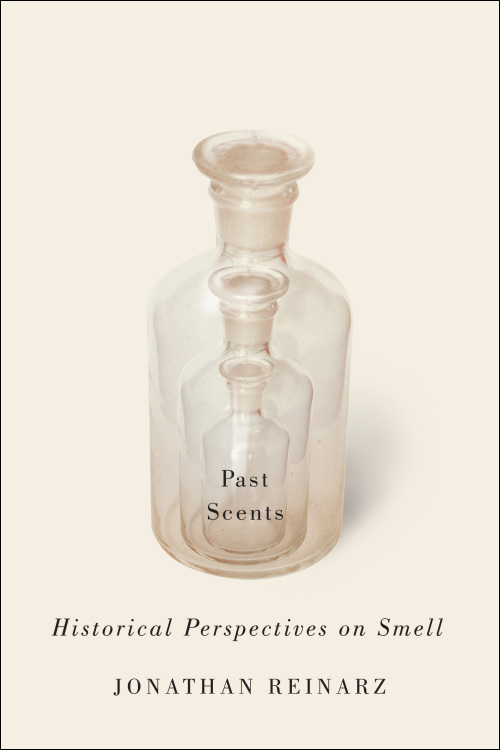
Jonathan Reinarz, Past Scents. Historical Perspectives on Smell, University of Illinois Press, 2014
(capitolul III: “Odorous Others. Race and Smell”)

The belief that Jewish bodies exuded a foul odor, or foetor Judaicus, was commonly accepted among medieval Europeans of both the literate elites and lower orders. It is a particularly poignant example of the way smell was used to register distaste for a racial group whose “evil” traits were assumed to relate to actual physical characteristics (in this case the nose).

The historian Eric Zaphran has traced these ideas back to the medieval Arabic scholar Abu Ma’shar, who wrote about the saturnine personality. In particular, it was the Jewish people’s association with the astrological sign of the god Saturn that reputedly gave them a fetid odor. Such references also extend back to the Roman period, although Semitic scent references are associated more often with religious practices distinct to Jews, such as fasting. The Roman poet Martial, for example, referred to the stink of “the breath of fasting Sabbatarian Jews.” Later, Guido Bonatti — the celebrated Italian astrologer and adviser to the Holy Roman emperor — described this scent as “goatlike,” at once correlating Jews with the devil and developing an associated personality type. Like goats, Jews were regarded as filthy, but they were said to have become foul from not working, producing nothing, and scavenging from European Christian society, a notion alien to England until the expulsion of 1290. This barrier between the two religious communities was regarded as one between barbarism and civilization but was not considered insurmountable. If a Jew were converted to Christianity, it was said, the Jewish stench transformed immediately into a fragrance sweeter than ambrosia. The allegation that Jews sacrificed Christian children in order to employ their blood in Passover rites and rid them of their distinctive “fetid” odor has also been argued to have an English archetype. Some even claimed that the aroma associated with Jews was a positive sign symbolizing devotion; smelling bad to mortals outside their faith, the devout at least smelled good to their God. There may occasionally have been more practical reasons for such perceived differences, as the daily washing of the genitalia was regarded as a Jewish custom and was not tolerated by medieval Christians.

As older notions attributing foul odors to Jews gradually declined, many continued to reiterate views that the food and personal habits of Jews violated civilized standards. Jay Geller has explored these ideas in the context of nineteenth-century Germany. During this period Jews were evidently denigrated and depicted as primitive or base. Rather than emphasizing any heightened senses, however, they were merely said to stink and were situated at the bottom of any imagined scent hierarchies. For example, the author of an article on urban sewage systems in Harper’s Magazine in 1885 pointed out that “cleanliness was a relative term; the ideas of a Polish Jew of the lower classes, of a New England housewife, and of a chemist are very different.” Presumably, the order in which these were listed was also intended to highlight a readily understood hierarchy of cleanliness. Cleansing communities, on the other hand, could also easily translate into campaigns aimed at eliminating those associated with filth and corruption. Efforts to purify the social body of perceived “corrupt elements” plumbed new depths in Nazi Germany, with Adolf Hitler clearly articulating the perceived links between smell and racial pollution in Mein Kampf:

The cleanliness of [Jews], moral and otherwise, I must say, is a point in itself. By their very exterior you could tell that these were no lovers of water, and, to your distress, you often knew it with your eyes closed. Later I often grew sick to my stomach from the smell of these caftan-wearers . . .

All this could scarcely be called very attractive; but it became positively repulsive when, in addition to their physical uncleanliness, you discovered the moral stains on this “chosen people.”

Sunday, October 4, 2020

ABC: Iasomia


Alături de trandafir, iasomia este una dintre esențele mitice ale parfumeriei. Aproape toate parfumurile feminine cuprind un iz de iasomie în compoziția lor, ca să nu mai vorbim de marile compoziții clasice cu iasomie, precum L’Aimant (1927) al lui François Coty, Arpège al lui Jeanne Lanvin sau Joy al lui Jean Patou.

Iasomia este una dintre cele mai delicate plante. Pentru a le păstra aroma, florile de iasomie trebuie să fie recoltate noaptea și tratate înainte de răsăritul soarelui. Ele nu suportă nici distilarea, nici temperaturile ridicate, fiind tratate pe cale tradițională, și anume prin tehnica enfleurage la rece, iar astăzi prin gaz rece. Iasomia din Grasse, la fel ca și trandafirul de mai, sunt pe cale de dispariție. Cele mai bune absolute sunt obținute în India (țara de origine a iasomiei) și în Egipt. Este nevoie de șapte milioane de flori pentru a obține un kilogram de absolut. Speciile cultivate sunt Jasminum grandiflorum, officinale sau odorantissimum.

Potrivit mitologiei indiene, Kama, zeul iubirii, își atingea „victimele” cu săgeți cărora le erau atașate flori de iasomie. Pentru Xenofon, iasomia este floarea Paradisului. Cleopatra, înainte de a-l ademeni pe Marc Antoniu în patul acoperit cu flori de trandafir, s-a dus să-l întâlnească pe o corabie a cărei cocă era construită din cedru, iar velele, îmbibate în esență de iasomie.

În China antică, iasomia era simbolul sexului frumos și al delicateței acestuia. China ajunge, în secolul al XVIII-lea, principalul producător de iasomie, cu o capacitate evaluată, după arhivele epocii, la peste un miliard de kilograme. Încă este cultivată, în cantități reduse, în provinciile din Sud. Potrivit artei feng shui, a avea iasomie în propria grădină este indispensabil armoniei casei. Farmacopeea chineză tradițională utilizează iasomia în amestec cu vin sau cu ceai sau ca ulei pentru masaj.

Iasomia devine, în secolul al XVIII-lea, floarea reprezentativă pentru Grasse. Napoleon achiziționa cantități imense pentru Joséphine de Beauharnais. Din cauza costului ridicat al muncii manuale, producția de iasomie, considerabil redusă, este astăzi mai mult simbolică. Principalii producători rămân India și Egiptul.

✎  Traducere a articolului „Jasmin” de Nicolas de Barry
Nicolas de Barry, Maïté Turonnet, Georges Vindry, L’ABCdaire du Parfum, Flammarion, 1998